DC-3105 to DC-3114 grade references
Reference density, porosity, hardness, strength and heat-resistance data taken from the supplied Dmaic grade workbook.
Published Dmaic-specific technical evidence, manufacturing-review guidance and clear specification inputs for carbon, graphite, carbide and ceramic components.
This page does not invent machine capacities, inspection equipment or universal tolerance claims. Where a capability depends on part size, material, geometry or equipment, Dmaic Carbon confirms it against the enquiry and drawing.
Reference density, porosity, hardness, strength and heat-resistance data taken from the supplied Dmaic grade workbook.
Published grade references include resin, antimony, lead, copper, copper & tin, bronze, nickel and babbitt variants. Final selection remains application dependent.
The product range uses company-supplied images for bearings, seal rings, segmented rings, vanes, rotors, blanks, blocks, graphite, carbide and ceramic components.
Dmaic Carbon’s published company content states that it manufactures and machines custom mechanical carbon, carbon graphite, synthetic graphite, silicon carbide, tungsten carbide and ceramic components. Machining feasibility is reviewed against material grade, wall thickness, bore and outside diameter, length, grooves, slots, segmentation, counterface and quantity.
No single tolerance value is presented as a blanket capability. Carbon and graphite behaviour varies by material, impregnation, geometry and size. Critical dimensions, geometric tolerances and acceptance criteria should be shown on the drawing so feasibility and inspection method can be confirmed before production.
Dmaic’s published Carbon Seal Rings range includes lapped carbon graphite seal rings and mechanical seal faces. For sealing duties, specify mating material, face geometry, flatness requirement, surface-finish requirement, pressure, speed, media and temperature so the manufacturing route can be reviewed.
These are specification examples, not claimed customer case studies. Actual OEM or customer case studies should be published only after Dmaic supplies verifiable project facts and permission for anonymised use.
Review fluid, solids, pressure, speed, face pairing, start-stop cycles, dry-running risk, thermal shock and acceptable leakage before selecting carbon, SiC, tungsten carbide or ceramic.
Review gas composition, vacuum level, rotor speed, vane geometry, lubrication regime, temperature and contamination limits before selecting carbon graphite vanes or rotors.
Review continuous and peak temperature, atmosphere, media concentration, oxidation exposure, thermal cycling and impregnation compatibility rather than relying on a single catalogue temperature.
These are published product-reference examples from the source material supplied for this website. They are not universal ratings and must be validated against grade, geometry, counterface, atmosphere, media and duty cycle.
Dmaic-supplied product content describes dedicated rotor grades for applications up to 800°C, together with high-vacuum, high-surface-speed and dry-running duties. Final grade suitability requires application review.
The supplied product content positions carbon-graphite stoker bushes for high-temperature travel-grate applications where oil or grease lubrication can become unsuitable; it references lubricant degradation concerns above about 177°C.
The supplied product content references duties from about 3.2 kgf/cm² down to high-vacuum conditions and peripheral speeds up to 12.7 m/s. These figures remain application- and grade-dependent.
Dmaic-supplied content describes machining and lapping of carbon graphite seal rings, including application-specific pairings with silicon carbide and tungsten carbide for liquid and gas sealing duties.
The supplied company content references copper, antimony, bronze, nickel, ferrous and white-alloy metal routes, plus phenolic, synthetic and epoxy resin systems, selected according to application requirements.
The Dmaic grade workbook supplied for this website publishes reference properties including density, porosity, hardness, compressive strength, transverse strength and heat-resistance fields for the DC-3105 to DC-3114 series.
These photographs show Dmaic-branded component examples. They are product images, not claims about a specific machine, inspection instrument or customer project.
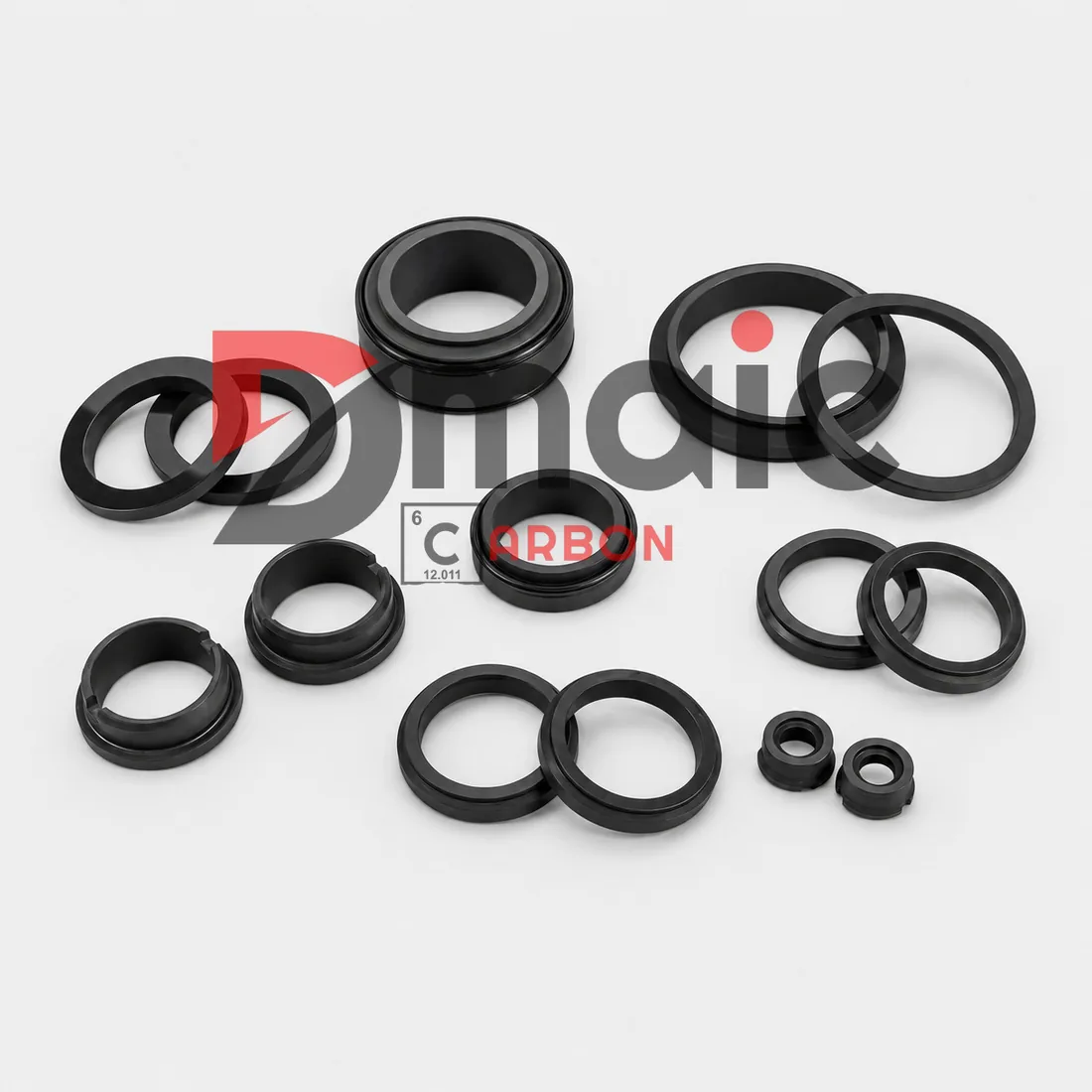
Company-supplied carbon sealing component photography.
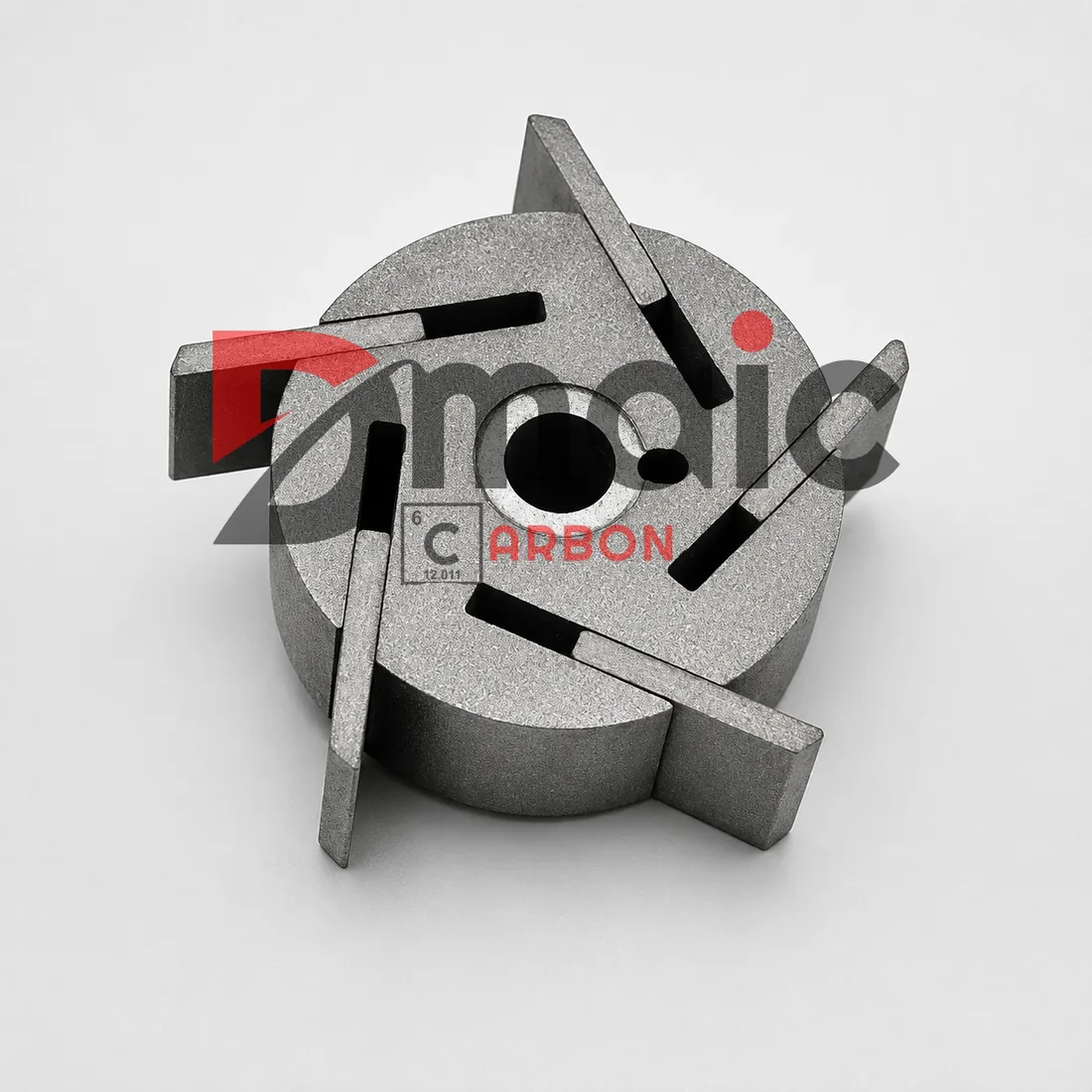
Company-supplied carbon rotor component photography.
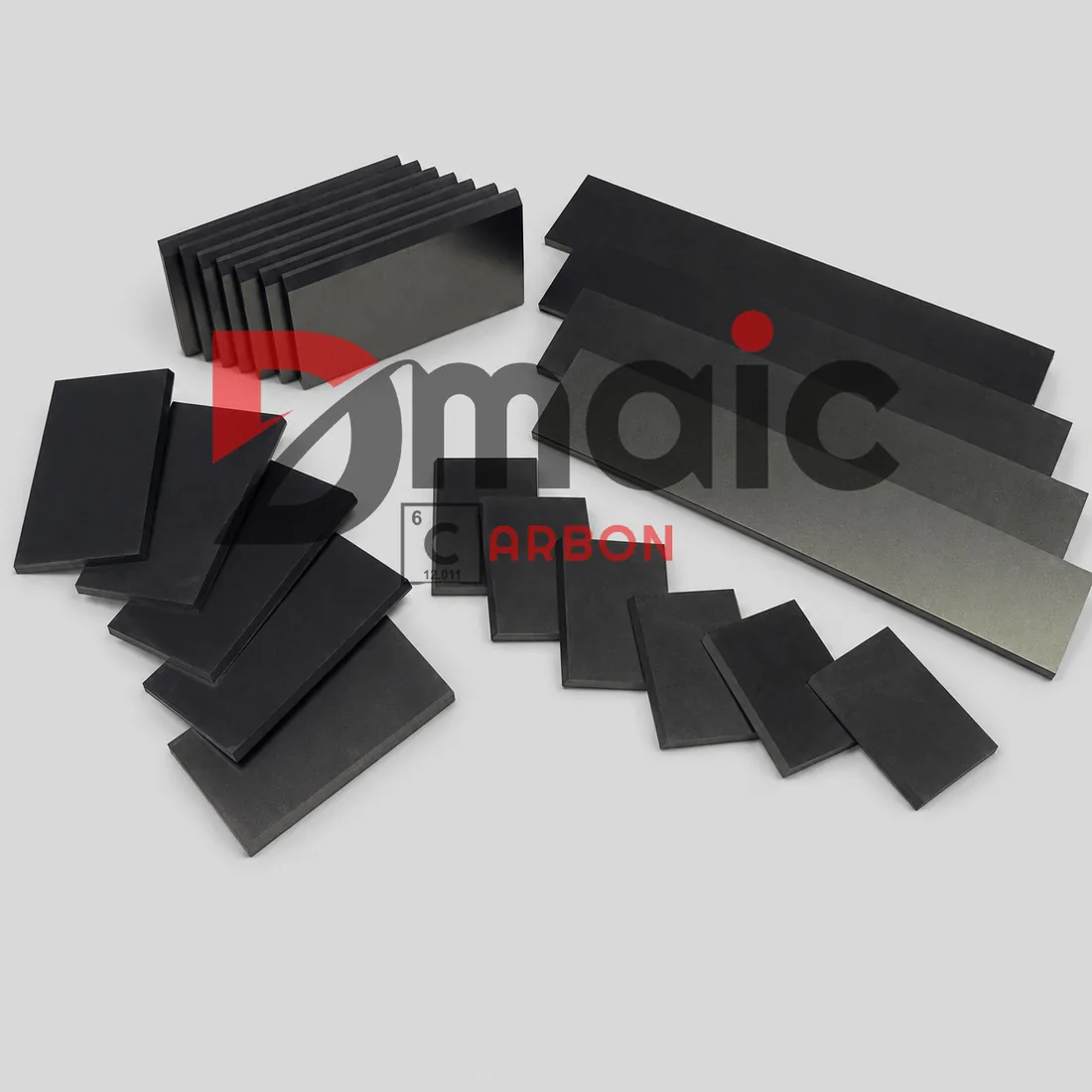
Company-supplied carbon vane component photography.
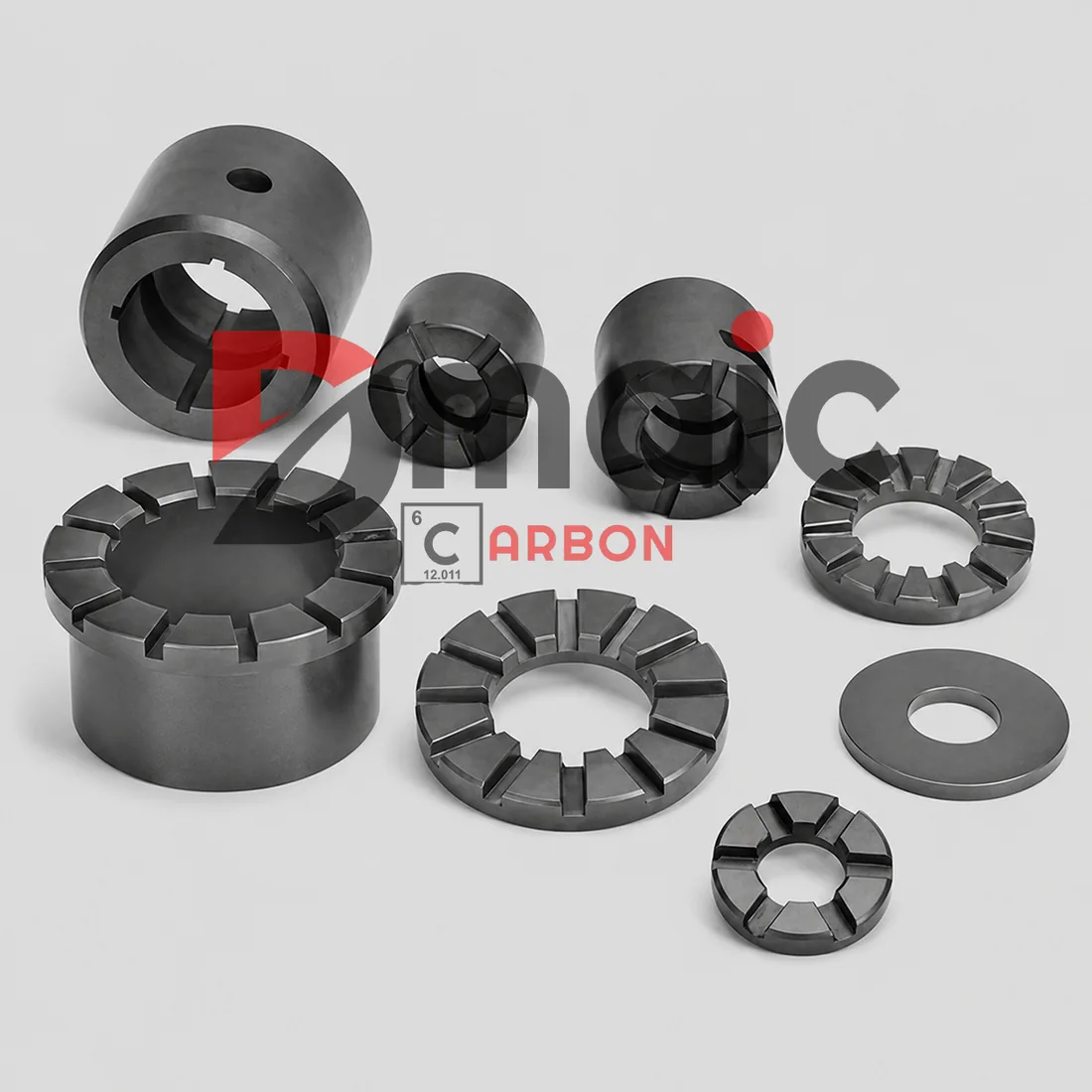
Company-supplied carbon bearing component photography.
Equipment-specific claims are intentionally not published here because a verified Dmaic inspection-equipment list was not included in the supplied source files. At quotation stage, identify the dimensions and characteristics requiring records so the inspection method and documentation can be agreed.
Include the operating conditions and required inspection documentation for a capability and manufacturability review.